Disclaimer: This article is based on actual news from the real world – honestly! However, it has been sprinkled with a healthy dose of satire.
A former CIA officer is accused of inventing a top-secret program out of thin air, making it classified to the point that nobody was allowed to ask about it, and then billing the United States government roughly $40 million in gold bars. And this actually worked. Until he got caught, that is.
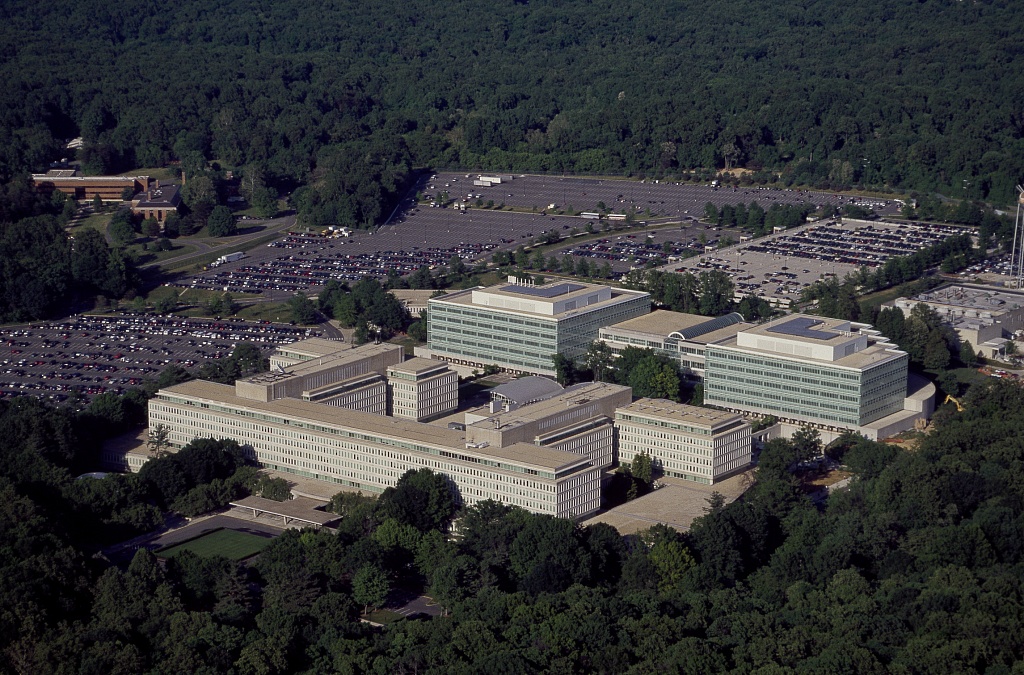
CIA headquarters, where top secrets go to die. (Carol M. Highsmith/wikimedia)
David Rush, who worked in the CIA’s Directorate of Science and Technology, allegedly told colleagues he was running a “special access program,” the most restricted category of government state secret, so secret that it’s illegal for most people to know it even exists. Rush apparently realized that this security classification would also be perfect cover for a fake program that does not exist at all.
The project supposedly involved keeping the government running after a nuclear war, which was supposed to explain the need for $40 million in gold bullion. Investigators say Rush had a defense contractor buy the gold under a sham contract, then recruited two CIA colleagues to help run the operation, one of whom transferred millions of dollars into it. Whether those colleagues understood what they were doing remains unknown, in part because the program’s own rules forbade them from describing their jobs to anyone, including investigators, and possibly even including themselves.
Court documents say Rush appears to have built a fake backstory for himself based on the same engineering principles as his fake program. Rush claims to have a degree from Clemson, a graduate degree from Rensselaer Polytechnic Institute, and service experience as a Navy pilot. He has no degree from Clemson, no degree from Rensselaer, and doesn’t appear to have ever flown anything in his life. His actual Navy job was information systems technician, which mainly involves rebooting planes, not flying them.
None of this stopped Rush from joining the CIA around 2009 and rising to become the agency’s liaison to a sensitive Pentagon nuclear submarine program, an assignment that came at the personal request of Deputy Defense Secretary Steve Feinberg. Pentagon chief spokesman Sean Parnell denies they had “a close relationship of any kind” and stated that Feinberg “never supported Mr. Rush’s career at any point in his life.” Except for, apparently, that one time when he did.
On May 18, FBI agents searched Rush’s Virginia home and inventoried 303 gold bars worth roughly $40 million, $2 million in cash, and 35 luxury watches because a man preparing for the apocalypse also needs to know what time it is, and 34 watches isn’t enough to do the job. Rush allegedly made his first request for gold and cash in November 2025, which meant he acquired about a third of a ton of precious metal in about six months. No known legitimate federal program has ever procured anything that fast, including the procurement reform office, which also explains the need for the procurement reform office in at least two different ways.
Rush is so far charged with one count of theft of public money, specifically for filing false timesheets claiming he was in the Naval Reserve. The fake degrees, the fake wings, the fake doomsday program, and the very real dragon hoard are, for the moment, background color. Which seems like a huge oversight, potentially on par with not noticing that any of this was going on, both in the past six months and since 2009.
On Friday, a federal judge ordered Rush held in Alexandria pending trial, agreeing with prosecutors that a man with $40 million in semi-portable wealth posed a flight risk, a semi-ironic finding given that Rush can’t actually fly. Several senior CIA officials have been placed on leave while the agency determines how its most secure category of secret spent six months covering for possibly the dumbest gold heist ever uncovered. The CIA notes that Director John Ratcliffe referred the case to the FBI the moment an internal review flagged it, which is true, but also notable that red flags first started appearing over 15 years ago.