Disclaimer: This article is based on actual news from the real world – honestly! However, it has been sprinkled with a healthy dose of satire.
A small town west of Montreal has become the first municipality in Canada to formally recognize that trees possess rights, which, among other things, elevates maples from syrup generators to a protected class and possibly creates the most Canadian constitutional crisis imaginable.
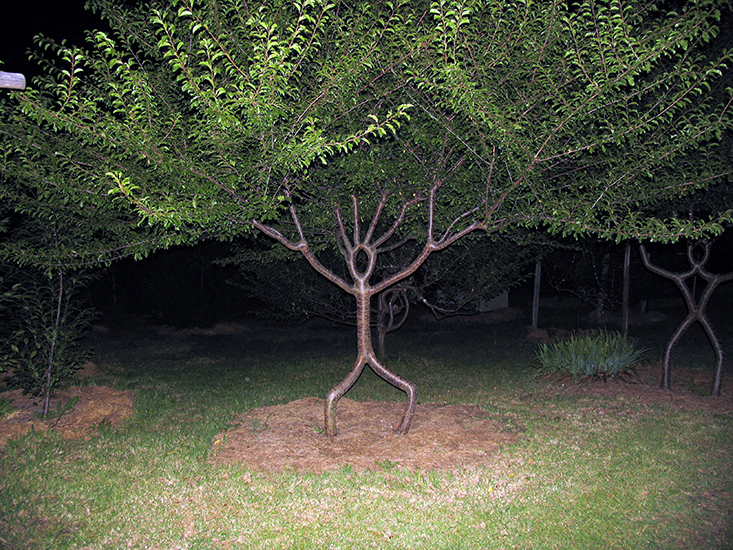
Trees are humans! Or something. (blackash/wikimedia)
The resolution adopted by Terrasse-Vaudreuil grants trees rights, including life, growth, integrity, and regeneration. Mayor Michel Bourdeau said the move was inspired by a documentary that explains that trees communicate through their root systems. Residents reportedly accepted this immediately because several of them claim to have already spent years arguing with birch trees during flood season.
Municipal lawyers spent most of the following week attempting to determine whether that statement also makes maple trees eligible for jury duty. They stopped short of confirming rumors that several mature oaks had already begun attending council meetings and lobbying excessively against all new parking lots. One particularly ambitious willow reportedly filed preliminary paperwork seeking recognition as a sovereign microstate after learning corporations enjoy many of the same rights as people.
Complications emerged after local arborists were asked how the town should handle a tree that refused removal, specifically how they could even tell in the first place. Existing bylaws contain remarkably little guidance for a 100-year-old sugar maple arguing that a proposed driveway would interfere with its deeply held religious beliefs regarding photosynthesis.
Other obstacles remain. An elm tree could object to having initials carved into its bark and demand restitution in the form of a public apology delivered in the slow ceremonial language of trees, which experts estimate requires approximately six months to complete the phrase “please stop.”
It’s also unclear whether this now means an Ent could run for mayor. Nothing in provincial law explicitly prohibits a candidate from being a thirty-foot-tall walking forest. Polling showed a hypothetical Ent mayoral candidate leading among undecided voters, primarily due to a campaign platform consisting entirely of “let’s think about this for another century.”
Several developers expressed concern that recognizing tree rights might interfere with construction. This statement was immediately challenged by a cedar grove that submitted a 400-page environmental impact report, arguing that every square foot of Canada is already technically occupied.
Local maples reportedly formed a collective bargaining unit after discovering that humans harvest their bodily fluids every spring and then sell them in novelty gift shops. The trees insist they are not opposed to syrup production but would like an end to what they describe as “an increasingly exploitative sap economy.”
The declaration takes effect immediately. Residents are encouraged to treat trees with dignity, respect, and solidarity. Municipal staff are also drafting contingency plans in the unlikely event that the forest achieves consciousness, learns where everyone lives, and decides to take revenge on humanity.
The hearing adjourned after a motion to recognize acorns as dependent minors passed unanimously.