Disclaimer: This article is based on actual news from the real world – honestly! However, it has been sprinkled with a healthy dose of satire.
The Transportation Security Administration has issued new guidance this week for international visitors returning home from the World Cup, reminding international travelers that ranch dressing remains classified as a liquid despite several passionate arguments to the contrary.
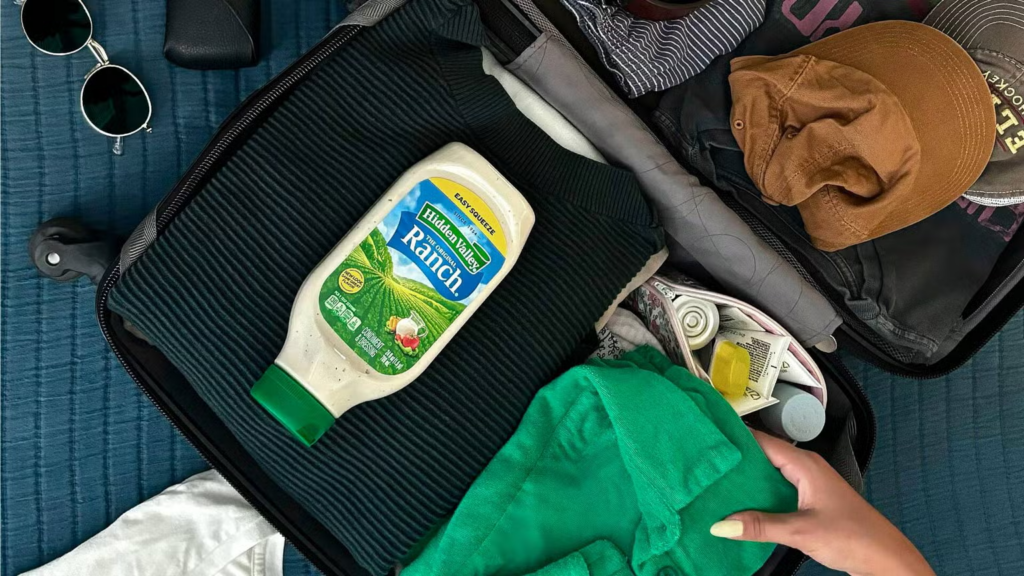
There's nothing hidden about this Ranch. (Hidden Valley Ranch)
The advisory follows a month-long outbreak of European tourists discovering ranch dressing for the first time and reacting as though archaeologists had unearthed a lost civilization beneath an Applebee’s parking lot. Social media has been filled with visitors documenting emotional first encounters with dipping sauces previously unknown outside America’s borders. Several appeared genuinely concerned that the United States had been keeping this technology secret. And maybe we should have been doing that all along. It’s too late now.
TSA officials said ranch containers larger than 3.4 ounces remain prohibited in carry-on bags, forcing some travelers to confront the unfortunate reality that freedom in America itself has volume-based restrictions. Agents reported finding luggage packed with bottles of ranch, packets of ranch, powdered ranch mix, and, in one case, a notebook containing what appeared to be handwritten ranch recipes copied from a Midwestern grandmother, now under witness protection after appearing in a viral TikTok video.
The agency attempted to keep its public messaging lighthearted, encouraging passengers to place their ranch in checked baggage instead of chugging it in the security line, a description that strongly implies this has happened several times already. Officials declined to confirm whether this recommendation was prompted by a specific incident, though several airports have reportedly established informal thresholds for what constitutes “too much visible ranch.”
Particular concern has centered around visitors who discovered Texas Roadhouse rolls, Raising Cane’s sauce, and Waffle House, in some cases all in the same day. Medical experts describe the combination as survivable, but note that returning to a home country where restaurant condiments arrive in containers smaller than a flower pot may produce lingering symptoms, including sudden-onset weight gain and a strong urge to explain American chain restaurants to confused relatives.
Early findings suggest that once exposed to ranch dressing, tourists begin using it in ever-increasingly inappropriate culinary circumstances. Researchers documented test subjects placing ranch on pizza, fries, vegetables, chicken, sandwiches, pint glasses, and eventually debating whether it could improve international relations.
The TSA says ranch dressing remains safe for export provided travelers comply with baggage regulations and refrain from attempting to declare it as a cultural artifact. Federal officials hope to convene later this summer to determine whether ranch dressing should be formally reclassified as a strategic national resource.