


Disclaimer: This article is based on actual news from the real world – honestly! However, it has been sprinkled with a healthy dose of satire.
A self-described monster hunter from the United States has flown more than 3,000 miles to Scotland to search for the fabled Loch Ness Monster, bringing with her a staggering array of scientific instruments, underwater microphones, and the kind of confidence typically reserved for reality TV ghost hunters. After 15 years of tracking strange creatures in Vermont’s Lake Champlain, Katy Elizabeth finally turned her sonar toward the Highlands and says she’s recorded a mysterious underwater sound. Katy insists it was “deeper, wetter, and more rhythmic than expected.”
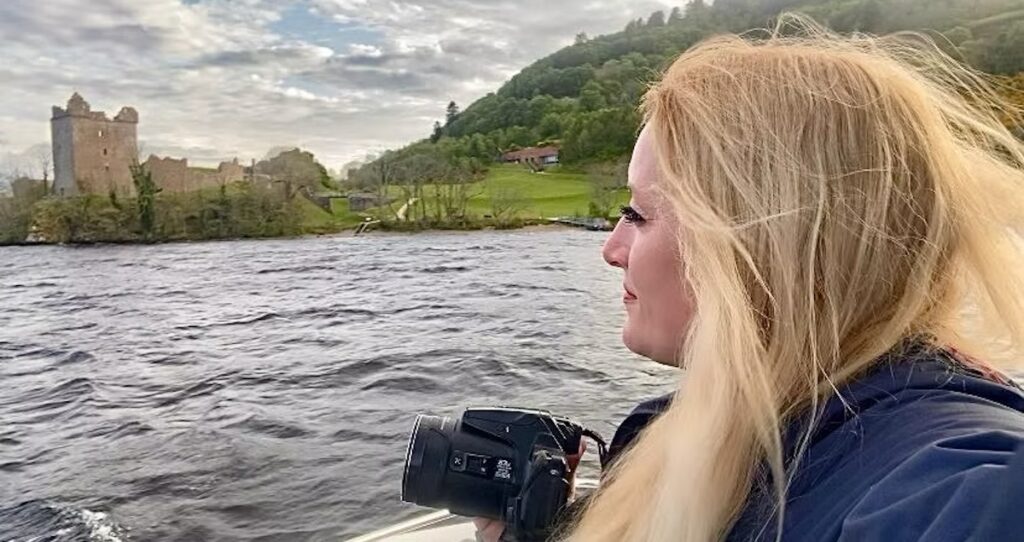
Katy, wondering if Nessie will ever return her calls. (katyelizabeth.org)
Elizabeth’s expedition was part of an upcoming documentary “Expedition Scotland: The Search at Loch Ness and Loch Morar” that aims to prove that centuries of eyewitnesses weren’t just seeing driftwood or drunken Scots. She claims to have captured “one strange sound” worth further study, continuing the time-honored tradition of monster hunters having only one tenuous piece of flimsy evidence yet somehow landing a TV series.
The recording lasted six minutes. The first four were ambient water. The last two were Katy whispering, “Please call me back, Nessie.”
“It wasn’t a boat, or an engine,” she said. “I know the difference. This was… alive. Possibly flirting. At least I hope so.” She lit up a cigarette, then exhaled meaningfully.
Her background is in cryptozoology, a field that combines zoology, folklore, and the persistent hope that stupid people keep believing this bull****. She’s spent a decade chasing creatures that never call back, like every Tinder user north of Boston. Elizabeth’s previous research focused on Lake Champlain’s resident cryptid “Champ,” where she reportedly recorded “complex underwater clicks,” which she believes are either echolocation or aquatic Morse code for “Send nudes.”
She now suspects Champ and Nessie may be related species, or at least share a common ancestor who “liked it long, scaly, and moist.”
Archaeologists countered that global myths often develop around shared human fears of the unknown, while Elizabeth countered with: “Have you ever tried to get sonar to record while something heavy breathes back at you? This week, I mean. And if so, are you free for dinner?”

If only Nessie made it this easy to get some good snapshots… (ubomira08/depositphotos)
The documentary, set to hit Amazon Prime in December, promises “new evidence, new theories, and thousands of extremely confused trout.” Insiders describe one particularly tense scene where Elizabeth’s underwater drone encounters a strange, moving shape, which turns out to be a haggis migrating upstream.
Asked for final thoughts on her findings, Elizabeth was coy. “My theory has to do with the ocean,” she teased. “There’s a connection there somehow. That’s all I’m going to say. If you know what I mean, and I think you do.”
When pressed for more details, she smiled and added, “Let’s just say… things are deeper than they appear.” Which certainly sounds like innuendo, but makes absolutely no sense.
The Loch Ness Monster remains unverified. But if Nessie is real, she’s been dodging sonar and horny Americans for nearly a century.
This story is based on fully factual news, but if we got it wrong, blame these guys, we’re just here to make it funny.




