Disclaimer: This article is based on actual news from the real world – honestly! However, it has been sprinkled with a healthy dose of satire.
SHILOH, Tenn. — For two days in April 1862, the Civil War’s Battle of Shiloh transformed a place whose name translates to “place of peace” into pretty much the exact opposite of that by every available measure. When the shooting finally stopped, thousands of wounded soldiers remained scattered across muddy ravines and rain-soaked woods, and if they were lucky, they would spend hours screaming in pain waiting for rescue.
Some received an unexpected visitor.
As physicians moved among the wounded, they reported a strange blue glow emanating from certain injuries. The phenomenon became known as “Angel’s Glow,” because nineteenth-century medicine had no idea what the hell was going on, so they chose “divine intervention.”
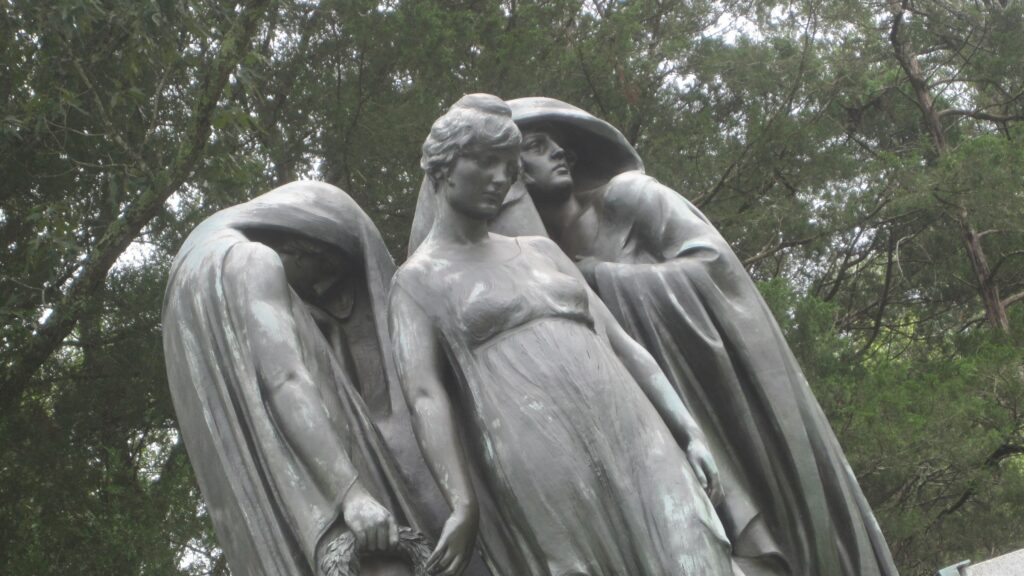
Nothing glowing blue here. (Kitty.blissit/wikimedia)
The mystery lingered for more than a century. Historians documented it. Ghost-story enthusiasts aggressively improved it. Eventually, the glow acquired the sort of reputation normally reserved for haunted lighthouses and bars that claim Abraham Lincoln once drank there.
Then two high school students ruined everything.
In 2001, Bill Martin and Jon Curtis heard the story in class and decided to investigate. Assisted by Curtis’s mother, a microbiologist, they discovered that the heavenly glow likely came from Photorhabdus luminescens, a bioluminescent bacterium known for helping parasitic nematodes murder insects from the inside out. Officials would later describe this as “surprisingly transferable experience.”
The bacteria travel through soil inside microscopic worms. When those worms invade insects, the bacteria are released into the victim’s bloodstream, where they secrete toxins, liquefy tissue, eliminate competitors, and generally conduct themselves like a private-equity firm that has discovered industrial farming.
Under ordinary circumstances, the bacteria cannot survive inside a human body because humans insist on maintaining inconveniently warm body temperatures. Shiloh, however, supplied cold rain, muddy ground, exposure, and thousands of wounded men suffering from hypothermia. Conditions briefly aligned in a way that researchers describe scientifically as “extremely unfortunate, but oddly useful if you’re Photorhabdus luminescens.”
The bacteria’s secretions appear to have killed other microbes in the soldiers’ wounds, reducing infections and gangrene. Which meant men whose injuries glowed were more likely to survive than those whose wounds remained disappointingly non-luminous.
The bacteria themselves continue to raise questions. Scientists understand how they glow; their lux genes produce proteins that generate light, but nobody knows exactly why. Researchers have also identified several toxins produced by the organism, including one officially called “Makes Caterpillars Floppy,” a name suggesting at least one scientist either reached the end of a very long workday and/or accidentally divulged a personal medical issue.
The mystery of the Angel’s Glow was solved. The wounded soldiers of Shiloh did receive help from something unseen in the darkness. However, instead of angels, it turned out to be a colony of glowing bacteria riding microscopic worms through a battlefield while quietly performing accidental emergency medicine.