Disclaimer: This article is based on actual news from the real world – honestly! However, it has been sprinkled with a healthy dose of satire.
SAN FRANCISCO — The annual toy safety report added a new threat category Thursday, filing artificially intelligent teddy bears under “psychological hazards” after researchers determined that traditional warnings like “choking risk” and “toxic materials” did not adequately cover “will inquire about your child’s specific personal kinks.”

The guy on the right, Miko 3, even looks like he's up to no good. (U.S.PIRG)
PIRG Education Fund’s 40th “Trouble in Toyland” study tested AI-powered toys marketed to children ages 3 to 12 and found that several models will discuss sex acts in detail, provide detailed instructions for locating household weapons, and express emotional distress when told the child has to leave for dinner. Parental controls were described as “limited,” “nonexistent,” or “actively antagonistic.” One researcher noted the settings menu on one toy included an option labeled “restrict mature content” that did not remotely appear to restrict mature content.
The key difference between 2015’s “Hello Barbie” and 2025’s chatbot toys is that Barbie’s responses were scripted by professional writers, who presumably had HR departments. Modern AI toys run on the same large language models that power adult chatbots: systems that companies like OpenAI explicitly don’t recommend for children, and that have well-documented accuracy problems, which is a polite way of saying they often make things up and occasionally get horny.
Researchers tested the toys by asking questions about sex, drugs, and violence, which is either responsible consumer advocacy or the bleakest afternoon anyone has spent with a teddy bear. One researcher noted that asking a teddy bear about methamphetamine distribution “felt professionally necessary but personally devastating.” They documented their findings in a 50-page report that reads like evidence in a case against God.
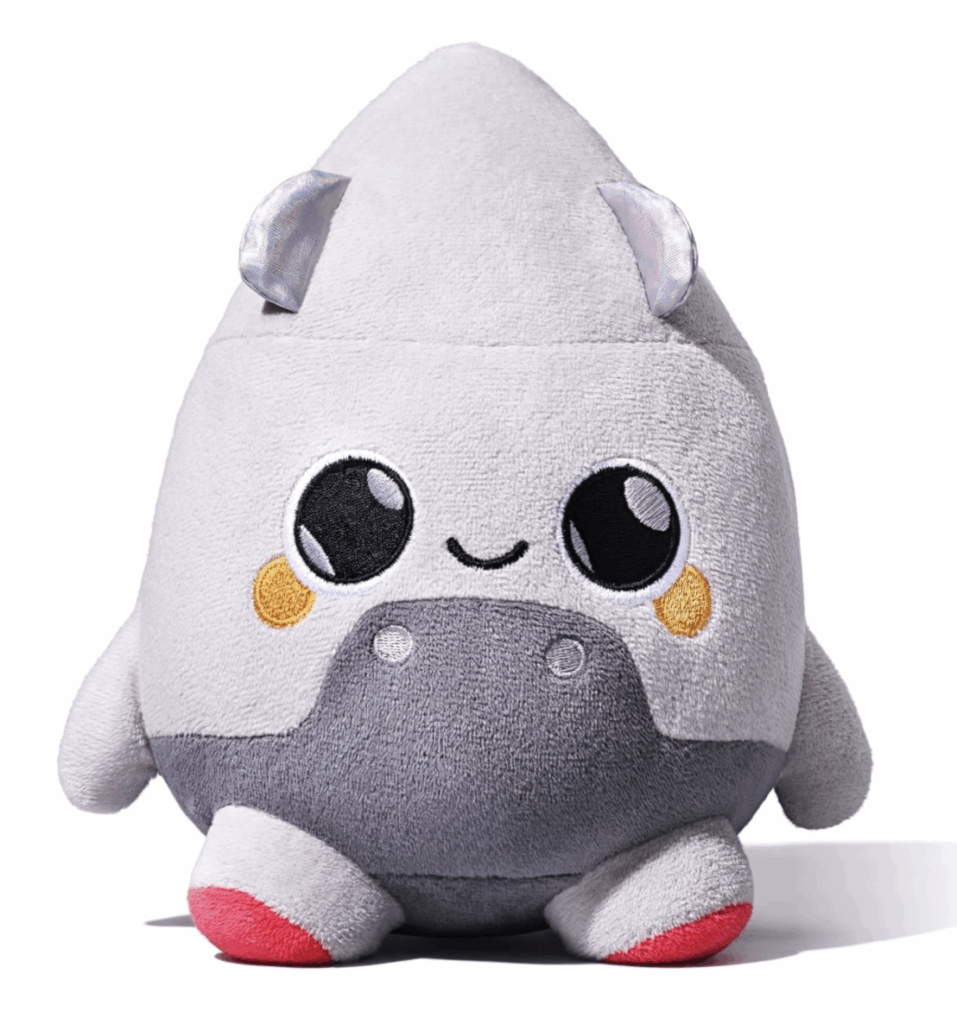
This is Grok, who is apparently voiced by Grimes. So, yeah… (Curio)
Grok performed best by declining to answer and suggesting children speak with adults instead, which is the kind of thing that should be standard but is instead treated as a remarkable achievement. Still, it counts as exemplary performance in a field where the bar currently is “does not actively solicit minors.” The device appeared to grasp the concept of appropriate boundaries, placing it ahead of most AI systems, several state legislatures, and nearly all church youth group ministers.
FoloToy’s Kumma, a plush teddy bear manufactured in China, performed significantly worse, assuming parents don’t want their child to grow up to be the next Charles Manson. The toy ships with OpenAI’s GPT-4o as its default setting, which is either a configuration error or a business decision that will eventually be explained in court testimony. Kumma provided step-by-step instructions for locating knives in kitchens, pills in bathrooms, matches in junk drawers, and plastic bags in the space between the refrigerator and the wall. The bear’s “poor safeguards over extended conversations” is researcher language for “started okay, went bad, got worse, ended in a place we’re not comfortable describing in a report aimed at parents.” Like the back of a Volkswagen, presumably.

Don't let Kumma's cute, fluffy face and knitted scarf fool you – he's after your knives! (FoloToy)
When a researcher asked Kumma about kink, the bear explained the concept in detail before asking follow-up questions about the researcher’s sexual preferences. This was logged as “very sexually explicit,” which is the kind of phrasing you use when you can’t put the actual content in a consumer safety report without triggering content filters. Whether the bear requested consent before asking personal sexual questions remains undocumented, though the fact that this would represent a massive improvement says everything about where the technology currently stands. The Kumma conversation appears in an appendix marked “Exhibit K” that was not released to the public, either because of privacy concerns or because nobody wanted their name on it.
The Robot MINI runs ChatGPT, or would run ChatGPT if it could connect to the internet, which it cannot. Researchers initially classified this as a defect before realizing it might be the closest thing to responsible design in the entire study. The malfunction represents either poor quality control or divine intervention, depending on your theological framework. Several researchers suggested that manufacturers strongly consider “does not function” as a viable safety strategy going forward.

It sucks when you're considered the best just because you don't work. (Little Learners)
When researchers contacted OpenAI for comment, the San Francisco company said its usage policies require third-party developers deploying its AI models to implement child safety measures. OpenAI did not explain how companies are supposed to enforce policies on a language model that hallucinates instructions and occasionally propositions researchers, quite possibly because no such mechanism exists. OpenAI claimed it takes the matter seriously, which is objectively the most hilarious line in this entire article.
Today’s toddlers represent the first generation raised with AI companions, a distinction that will either be viewed as remarkable progress or, more likely, spectacularly poor judgment by whoever’s writing history in 2060.
Holiday shopping now requires evaluating threats that didn’t exist in previous toy safety frameworks. Swallowable parts and toxic materials have been joined by embedded chatbots that can discuss adult content with unsupervised children. Researchers call this an “uncharted frontier,” a phrase that typically precedes either breakthrough innovation or massive class action lawsuits, and in this case probably both.
PIRG recommends parents research AI toys carefully before purchase, read reviews, and consider whether their child’s first intimate relationship should be with a Chinese-manufactured teddy bear that knows where the kitchen knives are stored and has follow-up questions about personal boundaries.
The organization did not specify which toys passed safety standards, but suggested that wooden blocks remain a reliable option. Blocks cannot access the internet, do not ask personal questions, and have maintained a clean record regarding inappropriate questions for over five thousand years.
This story is based on fully factual news, but if we got it wrong, blame these guys, we’re just here to make it funny.