


Astronomers using the James Webb Space Telescope have confirmed the existence of TOI-5205 b, a Jupiter-sized gas giant orbiting a red dwarf star only about four times its own radius, in a configuration that current formation models describe as “impossible”. The findings, published this week in The Astronomical Journal, come from an international team led by Caleb Cañas of NASA Goddard and Shubham Kanodia of Carnegie Science under a JWST program formally titled “Red Dwarfs and the Seven Giants,” a name selected by scientists who have apparently not been outside in some time.
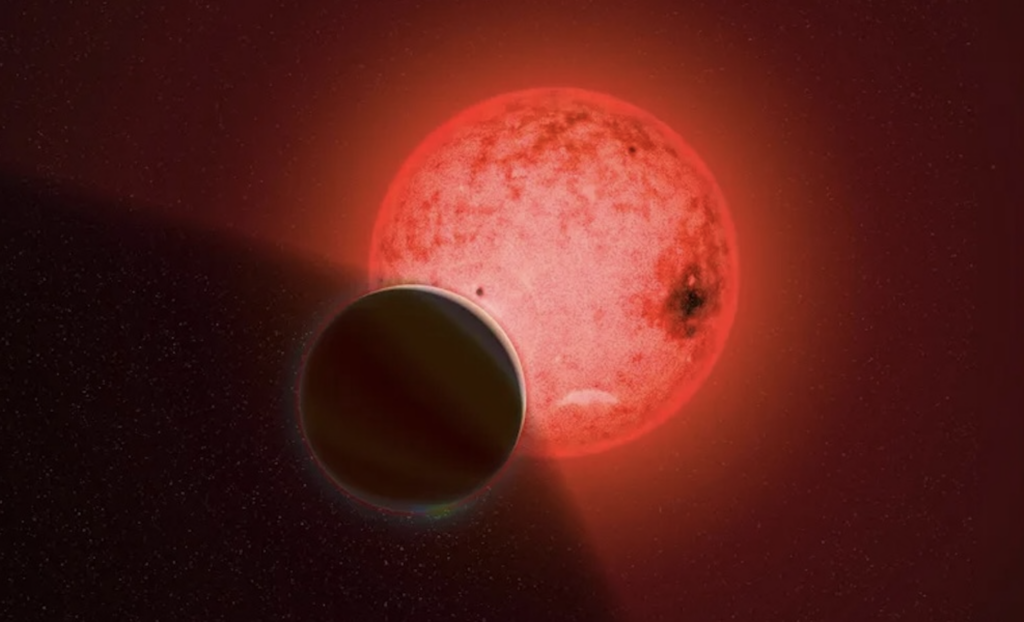
You can almost smell it from here! (Katherine Cain/Carnegie Science)
When the planet passes in front of its host star, it blocks roughly six percent of the star’s light, which constitutes a transit depth typically reserved for someone’s uncle standing in front of the television. Spectroscopic analysis of three such transits revealed that TOI-5205 b’s atmosphere consists chiefly of methane and hydrogen sulfide, the molecules responsible, respectively, for cow farts and the predominant smell of the inside of a middle-school locker room, and contains a lower concentration of heavy elements than its own host star. Researchers described the result as “unprecedented.” The host star declined to comment, but was observed standing slightly farther away.
“We observed much lower metallicity than our models predicted for the planet’s bulk composition,” Kanodia explained, using a tone scientists use when they would prefer to bore everyone into leaving the room. He explained that heavy elements had migrated inward during formation, leaving an interior and atmosphere that were, in the formal language of the field, “not on speaking terms.” It’s a condition known in astrophysics as stratification and in most long marriages as Tuesday.
The research forms part of a broader JWST Cycle 2 initiative studying giant exoplanets around M-dwarf stars, known by the acronym GEMS, because astronomers remain legally required to spend roughly 40% of each grant proposal on acronym workshops, then failing to apply what they were taught. Under the program, TOI-5205 b joins a small but growing catalog of planets that current theory says cannot exist, a catalog researchers now refer to, without apparent irony, as “the working group.”
Cañas said additional observations would be needed to determine how such objects come to be and in what sense they are “forbidden,” and by whom. Which is an odd thing to say out of the blue, but he did not elaborate further.
This story is based on fully factual news, but if we got it wrong, blame these guys, we’re just here to make it funny.




