


Disclaimer: This article is based on actual news from the real world – honestly! However, it has been sprinkled with a healthy dose of satire.
The Russian Academy of Sciences has proposed dividing the Moon into sovereign territories, with Russia receiving its own parcel of lunar real estate. The announcement was made by Vice President Sergei Chernyshev during a presidium meeting on space exploration, where he also announced that Russia’s next lunar mission has been delayed by another year, a detail that did not appear to create any cognitive dissonance among those present.
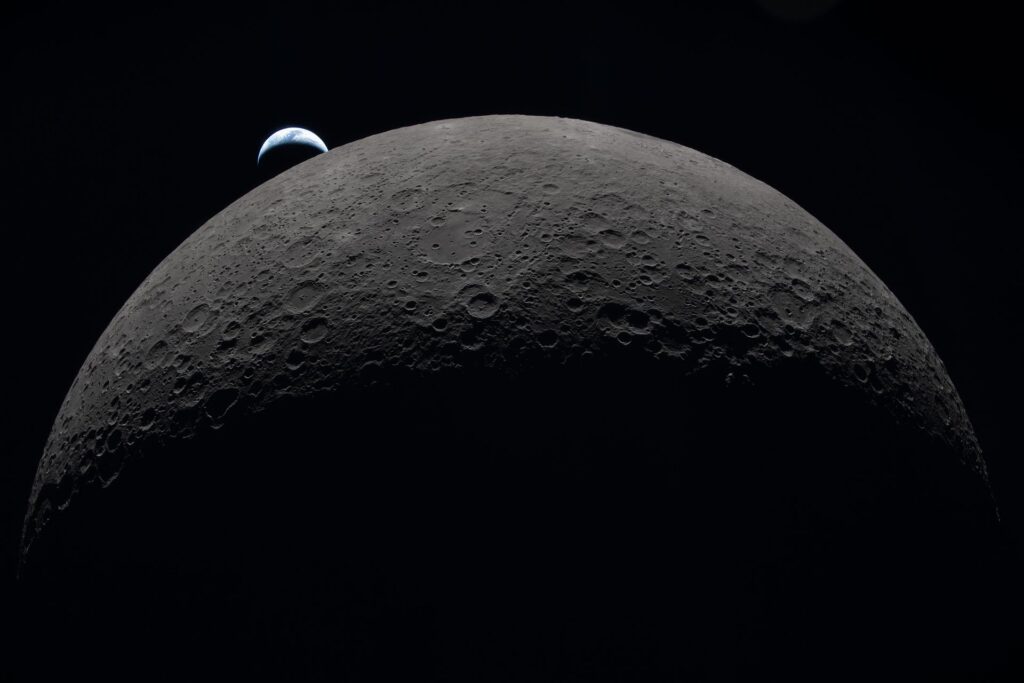
(NASA)
Chernyshev, an aerodynamics specialist whose résumé does not appear to include real estate law or treaty compliance, told attendees that the lunar program “will help establish sovereign Russian territories on the lunar surface.” He did not specify acreage, zoning restrictions, or how Russia plans to enforce property rights on a celestial body it hasn’t successfully reached since Leonid Brezhnev was still alive. The 1967 Outer Space Treaty, which the Soviet Union co-drafted and signed, explicitly prohibits national sovereignty claims on the Moon. However, Russia’s position on honoring its own treaty obligations remains, as always, situational.
Russia’s last actual contact with the Moon was Luna-25 in August 2023, a mission that ended when the spacecraft’s engine malfunctioned and smash-landed into the rim of Pontécoulant G crater. An investigation determined that an onboard control unit had failed, and the lander did not know where it was, how fast it was going, or that it should stop, which is also an excellent summary of Russia’s broader space strategy. “We’ve forgotten how to land on the Moon,” said astronomer Mikhail Marov. Russia’s current plan is to try to remember by 2028, then claim sovereignty by 2036, apparently under the “you break it, you bought it” clause in the Ferengi Rules of Acquisition charter from Star Trek.
Russia’s sovereign lunar ambitions will be funded by an estimated 700 billion rubles through 2036, a figure that sounds impressive until you remember Roscosmos recently disclosed 180 billion rubles in lost revenue from canceled contracts, leaving the agency in roughly the same financial position as a man budgeting for a yacht from inside a bankruptcy hearing. The broader space exploration budget is 4.4 trillion rubles, which, at current exchange rates and sanction-adjusted procurement costs, buys approximately one functioning space program or three non-functioning ones, depending on whether the accelerometers work.
This story is based on fully factual news, but if we got it wrong, blame these guys, we’re just here to make it funny.




