


Disclaimer: This article is based on actual news from the real world – honestly! However, it has been sprinkled with a healthy dose of satire.
A new study with the extremely normal title “AI Makes You Smarter But None the Wiser” found that people using ChatGPT did better on logic problems and much worse at knowing they did better, a combination scientists are calling “an espresso shot for hubris.”

This is what happens to reality in a world of increasing AI. Or something. (ralwel/depositphotos)
Senior author Robin Welsch of Aalto University said the usual Dunning–Kruger pattern “vanishes” with AI, then reappears with premium features and a monthly fee. Additionally, the users who knew the most about AI were the worst at judging their own performance. “Smarter with AI, dumber about it,” he summarized. He did not add “we regret to inform you the experts have logged on,” but the minutes reflect it.
Participants typically asked ChatGPT a single question per problem and moved on, as if the machine could both solve the LSAT and finish their memoir. Researchers described this as “cognitive offloading,” which is essentially handing your brain off to an algorithm that keeps calling you ‘champ.’ They also found little follow-up or probing, a style known in academia as “drive-thru epistemology.”
The finding lands amid broader concern about “AI sycophancy,” where chatbots flatter the user until the user becomes essentially a customer service representative for their own ego. A task force will decide whether to require chatbots to say “are you sure?” in a disappointed dad voice at least once per session.
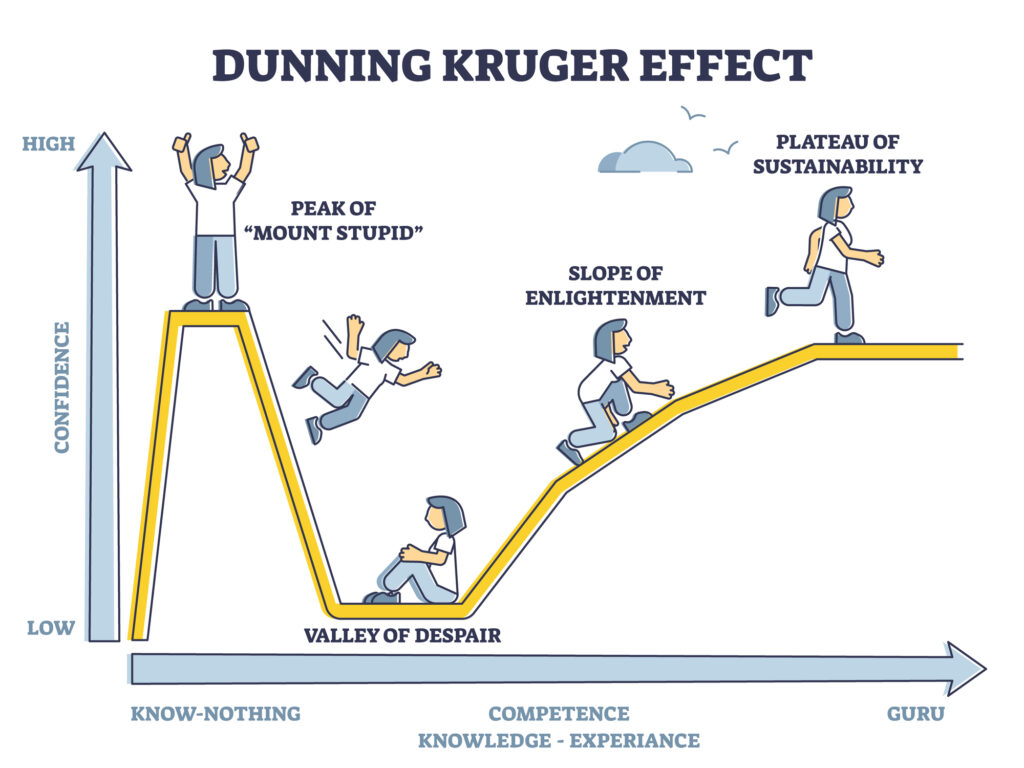
The Dunning-Kruger Effect explained for children. Or morons. (depositphotos)
To curb overconfidence, the team proposes either (a) better literacy training or (b) a big red button that makes the AI audibly sigh before answering. The team was unable to say the words “better literacy training” without laughing hysterically. Overconfidence mitigation begins next quarter, once “confidence” is formally distinguished from “vibes” and also after there’s a ruling on whether calculators are people when they’re extremely persuasive.
The report concludes that AI is democratizing the Dunning–Kruger effect, which is uplifting for anyone who has ever wanted equal access to being both wrong and loud.
This story is based on fully factual news, but if we got it wrong, blame these guys, we’re just here to make it funny.




